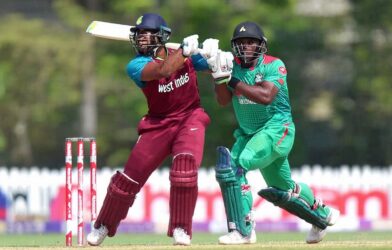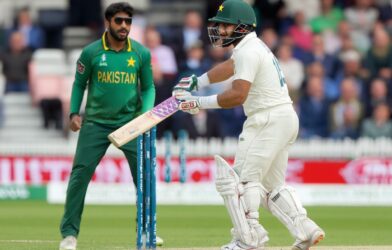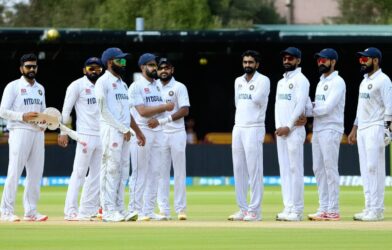




Cricket, with its rich tapestry of traditions and constant evolution, has always fascinated players and fans with its nuanced rules. Among the most iconic of these is the construct of the “over”—a set of consecutive balls bowled by a player from one end. While today’s audiences almost uniformly expect six balls to complete a Test match over, this practice was not always the rule. Understanding how the number of balls in a Test over originated reveals a layered story of adaptation, international influence, and the sport’s gradual move toward greater standardization.
The Early Days of Cricket Overs
The Experimental Years: No Fixed Ball Count
When Test cricket began in the late 19th century, the concept of an over was fluid. In the very first official Test match played between England and Australia at Melbourne in 1877, each over consisted of just four deliveries. This was not an arbitrary decision; court records and historical match summaries illustrate that various local cricket associations around England—and later the colonies—used over lengths that best suited their playing conditions.
For instance, throughout the 18th and much of the 19th centuries, English cricket often operated under its regional rules. It wasn’t uncommon for matches outside major cities to feature either four-ball or five-ball overs, reflecting the decentralized nature of cricket before international harmonization.
The Birth of the Four-Ball Over
The earliest codified overs in Test cricket comprised four balls. Matches between 1877 and the late 1880s commonly utilized four-ball overs, particularly in England and Australia. These shorter overs were a remnant of early cricket conventions and were considered sufficient for balancing player fatigue and match pacing at the time.
“The four-ball over was a practical arrangement shaped by limited daylight and the desire to maintain bowler effectiveness, especially before the advent of protective equipment and modern bowling techniques.”
— Dr. Robert Winder, Cricket Historian
Evolution: From Four to Six and Beyond
Gradual Shifts Across Continents
By the 1890s, the format of the over started to diversify. Australia, ever a pioneer in aggressive cricket, was the first to experiment with longer overs. In 1889–90, Australian domestic competitions tested with five and even six-ball overs to quicken the game’s tempo. England, balancing tradition with growing international interactions, maintained the four-ball standard into the 1890s before incrementally shifting to five balls, then finally settling on six-ball overs by 1900.
This lack of uniformity led to unique match scenarios. Test matches played in Australia, South Africa, England, and the West Indies often featured different over lengths in the same era. Throughout much of the 20th century, while England and many Commonwealth countries adopted six-ball overs, Australia famously introduced eight-ball overs in domestic and some international matches from the 1920s through the early 1970s. This change, however, was never adopted worldwide and eventually reverted to the now-standard six.
Why Did the Ball Count Change?
Several factors influenced these developments:
- Match Duration: Governing bodies experimented with over length to manage game duration and completion within daylight hours.
- Bowler Management: Shorter overs were initially preferred to limit bowler fatigue, especially in eras with no fielding restrictions or protective gear.
- Spectator Experience: As cricket’s popularity soared and international tours became more regular, longer overs were seen as improving the flow and excitement for fans.
- International Standardization: Over time, with increased international fixtures and the rise of the International Cricket Council (ICC), move towards a harmonized six-ball over reflected the sport’s professionalization.
Key Milestones in Over Length
- 1877–1889: Four-ball overs in all Test cricket.
- 1890s: Transition to five or six-ball overs in Australia and South Africa.
- 1900 onwards: Six-ball overs become the norm in England and most Test nations.
- 1920s–1979: Australia experiments with eight-ball overs domestically and in some Tests.
- 1979–Present: Universal adoption of the six-ball over in Test matches worldwide.
The Six-Ball Over Becomes Standard
The move toward universally enforcing the six-ball over did not occur overnight. Cricket’s authorities recognized the logistical and competitive challenges of differing over lengths. A landmark moment arrived in the 1970s, when the ICC decreed, for the sake of global consistency, that all Test matches would comprise six-ball overs.
As Test cricket’s profile rose, so did the need for clear statistical comparison. Consistent overs helped normalize player records—one of the cornerstones of cricketing culture. The rule also facilitated easier spectator understanding, both live and through the rapidly emerging medium of global television.
Impact on Modern Cricket
Historical Statistics and Record-Keeping
The evolution of the number of balls in an over complicates statistical comparisons across eras. For example, bowlers of the early Test era delivered fewer balls per over and potentially bowled more overs per match, while modern bowlers navigate the tactical nuances of the standardized six-ball set. Run rates, wickets per over, and even career longevity statistics must be considered in this shifting historical context.
On the positive side, the uniform six-ball over underpins the dramatic pacing of both five-day Test cricket and the many innovations within the game’s shorter formats, such as ODIs and T20s.
Broader Reflections on Cricket’s Adaptability
Cricket’s incremental approach to standardizing overs mirrors the game’s willingness to embrace change while respecting its historical roots. This spirit of adaptation continues to drive other essential innovations, from limited-overs cricket to Decision Review Systems and increased emphasis on player safety.
Conclusion
The history of how many balls were originally in one Test over is a microcosm of cricket’s broader journey—a blend of localized improvisation evolving towards international consensus. Beginning with four-ball overs during the sport’s formative years, the shift to six balls per over illustrates cricket’s adaptability and growing professionalism. As the game continues to evolve, these foundational rules serve as a fascinating reminder of its rich, complex heritage and commitment to fair competition.
FAQs
How many balls were bowled in an over during the first Test match?
In the inaugural Test match in 1877 between England and Australia, each over consisted of four balls.
When did cricket switch to six-ball overs?
The transition toward six-ball overs began in the early 20th century. By the late 1970s, six balls per over became the universal standard in Test cricket globally.
Did any country use over lengths other than six balls?
Yes, countries like Australia and South Africa experimented with five, six, and even eight-ball overs. Australia used eight-ball overs in domestic and some Test matches until the late 1970s.
Why were over lengths initially different between countries?
Local cricket boards set their own rules based on playing conditions, available daylight, and tradition, resulting in varying over lengths before global standardization.
Has the number of balls per over ever changed in limited-overs cricket?
While the six-ball over is now used in all formats, earlier forms of limited-overs cricket sometimes experimented with different ball counts before adopting the modern standard.
Does the historical change in overs affect cricket statistics?
Yes, earlier players’ statistics require contextual understanding, as differences in over length influenced match tempo, bowling workload, and run rates.