



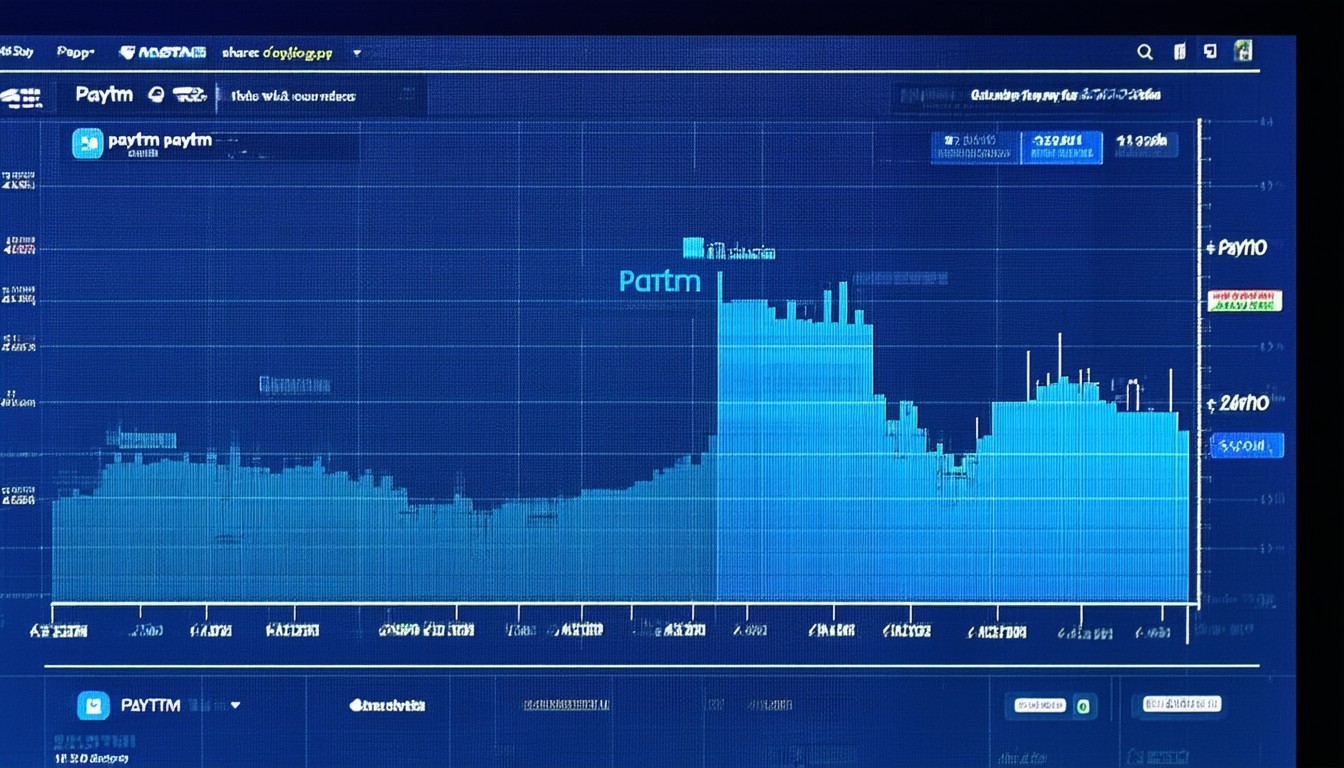
The Indian stock market has seen significant transformation in recent years, and the journey of Paytm’s share price exemplifies this evolution. As India’s largest digital payments brand, Paytm not only reflects the promise of fintech but also highlights the volatility and depth of investor sentiment in the digital economy. Understanding the trajectory of the Paytm share price involves diving into live updates, in-depth technical analysis, and the broader context of the company’s strategic moves and regulatory landscape.
Background: Paytm’s Stock Debut and Market Sentiment
Launched in 2010, Paytm rapidly grew from a mobile recharge platform to a comprehensive digital wallet, e-commerce, and fintech ecosystem. When Paytm’s parent company, One97 Communications, launched its IPO in November 2021, it was India’s largest-ever tech IPO at the time. However, market expectations quickly collided with reality.
Paytm’s shares debuted below their issue price, which sent ripples through the market. The initial disappointment underscored concerns around profitability, intense competition, and regulatory scrutiny in India’s fintech space. As the months unfolded, Paytm’s share price continued to fluctuate, mirroring both macroeconomic factors and company-specific news.
“The journey of Paytm stock has been a stress-test of investor faith in Indian fintech. Market cycles here often reflect a tug-of-war between innovation optimism and the harsh metrics of quarterly numbers.”
— Ashish Gupta, Senior Equity Analyst, Mumbai
Paytm Share Price: Real-Time Performance and Key Metrics
Much like other high-growth tech firms, the Paytm share price reacts sharply to economic news, sector developments, and business milestones. Investors and analysts closely track daily price movements through leading Indian stock exchanges such as NSE and BSE.
Recent Share Price Highlights
- Volatility: Paytm’s share has witnessed frequent swings—upward after positive operational updates or regulatory clarity, and downward after disappointing earnings or adverse news.
- Trading Volumes: As of recent months, trade volumes often spike during major announcements, reflecting active participation from retail and institutional investors.
- Market Capitalization: Despite early setbacks, Paytm remains among the top digital-first financial service companies by market cap in India, albeit with notable fluctuations.
For live Paytm share price updates, investors typically rely on platforms like Moneycontrol, NSE India, or Bloomberg, which deliver real-time charts, technical indicators, and historical comparisons.
Technical Analysis: Charting Paytm’s Price Trends
Beyond headline numbers, technical analysis provides investors with a toolkit to interpret patterns and make informed predictions. Chart analysts often use indicators such as moving averages, RSI (Relative Strength Index), support and resistance levels, and Fibonacci retracements to map Paytm’s share price journey.
Key Technical Patterns Observed
Moving Averages
- The 50-day and 200-day moving averages are pivotal in identifying the prevailing trend. Paytm’s share price has, at times, traded below these averages, signaling persistent bearish sentiment, but recovery attempts are closely watched by traders.
Support and Resistance
- Historical price points around key psychological levels (such as ₹500 or ₹1000) often serve as crucial support or resistance lines. Breaches or rebounds at these points typically trigger buying or selling waves.
RSI and Momentum Indicators
- An RSI hovering near or below 30 may indicate that Paytm’s stock is oversold, possibly ripe for a technical bounce. Conversely, readings above 70 could signal an overbought condition and potential correction.
Real-World Application
Consider an instance when Paytm reported a surge in transaction volume following a festive season. The share price, reacting to the operational improvement, briefly broke through a resistance line. Many traders leveraged this move for short-term gains, while long-term investors assessed it as a possible sign of fundamental recovery.
Fundamental Analysis: Growth Drivers and Challenges
While technical cues provide trading signals, fundamental factors determine the long-term trajectory of the Paytm share price.
Revenue Growth and Diversification
Paytm’s revenue mix spans payments, banking services (Paytm Payments Bank), wealth management, and e-commerce. Revenue growth in its merchant and financial services segments often results in positive investor sentiment.
Path to Profitability
A core debate among market observers is Paytm’s path to sustainable profitability. Cost reduction initiatives, better loan recovery rates, and ecosystem expansion are considered crucial levers.
Regulatory Scrutiny
As a leading fintech player, Paytm faces regular oversight from the Reserve Bank of India and other bodies. Regulatory directives, especially related to digital wallets or data localization, have periodically influenced its share price.
Market Comparisons and Industry Benchmarks
It’s instructive to compare Paytm’s performance with that of its peers, such as PhonePe, Google Pay, and traditional competitors like SBI or HDFC Bank in digital banking.
- Market Share: Paytm enjoys a significant share in merchant payments, but faces stiff competition in P2P (peer-to-peer) payments.
- Cross-Sector Movements: Moves by global giants (e.g., Apple Pay launching in India) can trigger sector-wide revaluations, impacting Paytm’s stock indirectly.
Paytm’s position as both a disruptor and an incumbent in digital finance makes its stock a barometer for the health of Indian fintech.
Investor Perspectives: Sentiment and Outlook
Investor sentiment around the Paytm share price oscillates between optimism about digital payments adoption and wariness of profit headwinds.
- Retail Investors: Many individuals see Paytm as a long-term structural story but are cautious given past volatility.
- Institutional Investors: These stakeholders focus more on quarterly results, market share growth, and regulatory risks.
Expert View
“Smart investors look beyond short-term price gyrations. For growth stories like Paytm, strategic execution and regulatory adaptability remain key. Entry and exit points should align with one’s risk tolerance and market view.”
— S. Ramesh, Portfolio Manager, Mumbai
Strategic Moves and Future Catalysts
Looking ahead, several triggers could shape the Paytm share price:
- New Product Launches: Expansion into insurance, credit, or wealth tech may open new revenue streams.
- Partnership Announcements: Deals with major banks, global brands, or government entities could boost sentiment.
- Improved Profit Margins: Sustained reduction in losses or breakthrough quarters may reset market perceptions.
Such developments, when accompanied by transparent communication, tend to strengthen investor confidence over time.
Conclusion: Paytm Share Price in Perspective
Paytm’s share price story is emblematic of India’s digital growth narrative—one marked by rapid innovation, market volatility, and evolving regulatory frameworks. Technical indicators and live updates offer traders tactical advantages, while long-term investors remain focused on Paytm’s fundamentals and strategic execution. Ultimately, as fintech adoption accelerates and competition intensifies, Paytm’s market value will likely continue to be an insightful proxy for the health and direction of Indian digital finance.
FAQs
What factors most influence the Paytm share price?
Paytm’s share price is shaped by a combination of earnings results, regulatory changes, competitive dynamics, and broader stock market sentiment. Significant company announcements and macro trends in digital payments also have notable impact.
Where can I check live Paytm share price updates?
Live updates on Paytm share price are available on major Indian stock exchanges (NSE and BSE) and financial platforms like Moneycontrol, Bloomberg, and Reuters.
How is technical analysis applied to Paytm’s stock?
Technical analysts use charts and indicators like moving averages, RSI, and support/resistance levels to spot trends and potential entry or exit points in Paytm stock. These tools help investors interpret trading patterns and make informed decisions.
What are some risks associated with investing in Paytm shares?
Key risks include regulatory changes, sustained losses, intense competition, and fluctuations in digital transaction volumes. Investors should consider these, along with their risk profile, before investing.
Has Paytm achieved profitability yet?
Paytm has focused on reducing losses and growing its revenue, but reaching consistent profitability remains a challenge. Market analysts closely watch quarterly reports for progress toward this goal.
Is Paytm’s share price representative of the Indian fintech sector?
To a large extent, yes. As one of the most prominent digital finance companies, Paytm’s market moves often reflect broader trends and investor sentiment within India’s burgeoning fintech industry.