


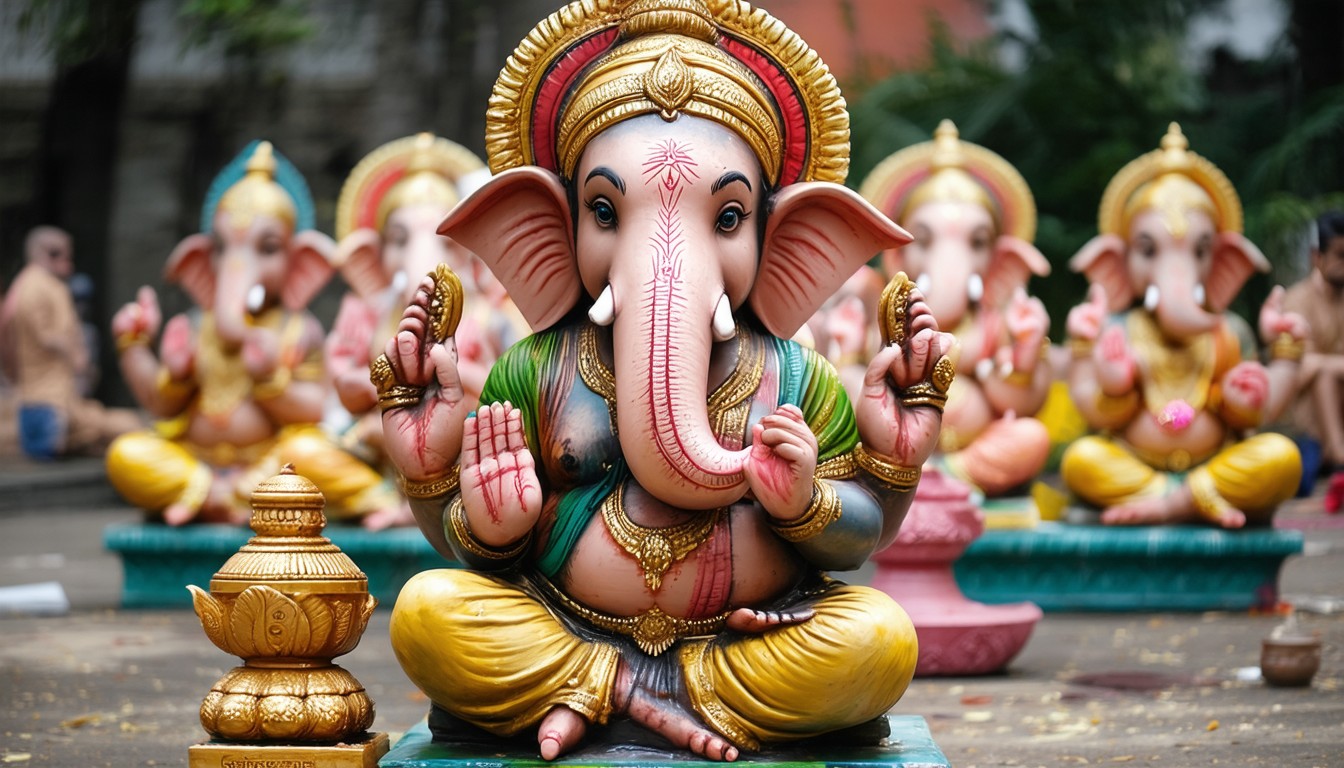
Ganesh Chaturthi stands as one of India’s most anticipated and widely celebrated festivals, honoring the birth of Lord Ganesha—the beloved elephant-headed remover of obstacles and harbinger of wisdom. In 2025, Ganesh Chaturthi falls on August 27, promising a season of vibrant celebrations that blend deep spiritual meaning with rich cultural practices across the country.
At its core, Ganesh Chaturthi is more than a festive occasion. It’s a time for reaffirming faith, community connection, and the triumph of wisdom over ignorance. Historically rooted in the Puranic texts, the festival gained mass popularity in the 19th century during India’s struggle against colonial rule, championed as a unifying force by leaders like Lokmanya Tilak. In contemporary India, its resonance extends beyond religious ritual, encompassing social harmony, environmental consciousness, and artistic innovation.
Rituals and Traditions: Honoring Ganesha
The Sacred Installation (Pranapratishtha)
Central to Ganesh Chaturthi is the installation of intricately crafted Ganesha idols—ranging in size from compact home icons to towering public statues—made of clay, eco-friendly materials, or, less often, plaster of Paris. The ritual of “Pranapratishtha” signals the invocation of Ganesha’s presence into the idol, performed amid Sanskrit chants and the fragrance of incense.
The daily worship (puja) typically involves the offering of:
- Modaks: Sweet dumplings considered Ganesha’s favorite.
- Durva Grass: Symbolizing purity and devotion.
- Flowers, Coconut, and Fruits: Offered to invoke blessings.
Family and community members recite prayers and sing “aarti” in reverence. While smaller celebrations happen in private homes, large-scale “pandals” (community installations) transform neighborhoods into hubs of devotion and artistic competition.
Visarjan: The Immersive Goodbye
After a period—often 1, 5, 7, or 10 days—the festival culminates in “Ganesh Visarjan,” the emotional procession and immersion of the deity in rivers, lakes, or artificial water bodies. This symbolic ritual signifies Ganesha’s return to Mount Kailash, taking devotees’ sorrows with him, while serving as a spiritual reminder of life’s impermanence.
Notably, in recent years, environmental awareness has spurred a shift toward eco-friendly idols and artificial immersion tanks, aiming to protect aquatic ecosystems.
“Ganesh Chaturthi exemplifies the harmony between tradition and environmental stewardship. The festival’s evolution toward eco-friendly practices has set a new benchmark for sustainable celebrations in India.”
— Dr. Shubha Vilas, spiritual teacher and author
Regional Variations and Nationwide Celebrations
Maharashtra: The Heartbeat of Ganesh Utsav
Maharashtra remains the epicenter of Ganesh Chaturthi festivities, where public pandals attract both local devotees and international visitors. Each year, cities like Mumbai and Pune showcase elaborate themes, cutting-edge artistry, and organized charity drives. Iconic idols such as Lalbaugcha Raja draw crowds numbering in the millions over the festival’s course.
Southern India: Family-Centric Traditions
States like Andhra Pradesh, Tamil Nadu, and Karnataka observe Ganesh Chaturthi in a more private, family-focused manner. Here, households perform unique rituals, sometimes baking traditional sweets like “Kudumulu” and “Undrallu,” blending local flavors with devotional fervor.
Western and Eastern India: Diverse Customs
Gujarat’s Ganesh Chaturthi merges processions with folk music and community feasts, while Odisha and West Bengal incorporate regional mythology and local art forms, emphasizing Ganesha’s aspect as “Vighnaharta” (remover of obstacles).
Beyond India, Indian communities in Mauritius, the United States, and the United Kingdom vividly recreate these traditions, using the festival as a way to strengthen cultural bonds abroad.
Evolving Practices: Sustainability and Innovation
Embracing Eco-Friendly Celebrations
The environmental impact of idol immersions has sparked innovation over recent years. Thousands of mandals (community groups) now champion “Green Ganesha” campaigns, promoting:
- Natural clay or red soil idols that readily dissolve in water.
- Natural dyes and plant-based decorations.
- Artificial immersion tanks provided by municipalities to safeguard local water bodies.
Organizations and schools conduct workshops in idol-making, urging devotees to prioritize biodegradable materials. Many metropolitan cities have recorded measurable reductions in water pollution and waste as a result.
Technology and Digital Rituals
Ganesh Chaturthi 2025 is expected to see a deepening of digital participation, a trend born during pandemic lockdowns. Livestreamed aartis, virtual pandal tours, and online competitions allow devotees both local and global to join in, breaking the barriers of physical distance.
In practice, many families now combine traditional gatherings with digital outreach, enabling relatives from overseas to witness rituals in real time. The convergence of technology and spirituality reflects the adaptability of Indian traditions in a global, connected era.
Meaning in Modern Lives: Why Ganesh Chaturthi Still Resonates
At a time when rapid change, urbanization, and digital lifestyles can erode community ties, Ganesh Chaturthi remains a cohesive force. Sociologists credit the festival with reinforcing neighborhood bonds, driving collective responsibility, and fostering intergenerational dialogue through the sharing of stories and customs.
Business communities also mark the festival as an auspicious beginning for new ventures. Shops, offices, and even start-ups perform special pujas seeking Ganesha’s blessings for wisdom and prosperity, reflecting an enduring belief in spiritual foundations for material success.
Conclusion: Tradition, Renewal, and Collective Joy
Ganesh Chaturthi 2025 promises to blend the past’s deep spiritual roots with the dynamic practices of the present. From eco-conscious innovations to technological inclusivity, the festival continues to evolve without losing its sense of awe, community, and devotion. As families and cities prepare to welcome Lord Ganesha this August, they do so with reverence, creativity, and a shared commitment to harmony—honoring a tradition that brings millions together in fervent celebration.
FAQs
When is Ganesh Chaturthi in 2025?
Ganesh Chaturthi falls on August 27, 2025. The festival’s timing follows the Hindu lunar calendar and typically lasts for 10 days.
Why is Ganesh Chaturthi celebrated?
The festival marks the birth of Lord Ganesha, honored as the remover of obstacles and the god of new beginnings. It’s an occasion for spiritual renewal and seeking divine blessings.
How is Ganesh Chaturthi celebrated at home?
Families install Ganesha idols, perform daily prayers, offer sweets like modak, and end with the visarjan ritual. Some may invite friends and neighbors to join in the celebrations.
What are eco-friendly Ganesh idols and why are they important?
Eco-friendly idols are made from natural clay, plant-based dyes, and biodegradable materials. They dissolve easily in water, reducing pollution and protecting aquatic life during immersion.
How has technology influenced Ganesh Chaturthi celebrations?
Online rituals, virtual visits, and livestreamed aartis enable wider participation. Technology helps families connect across distances, keeping traditions vibrant for a global community.