
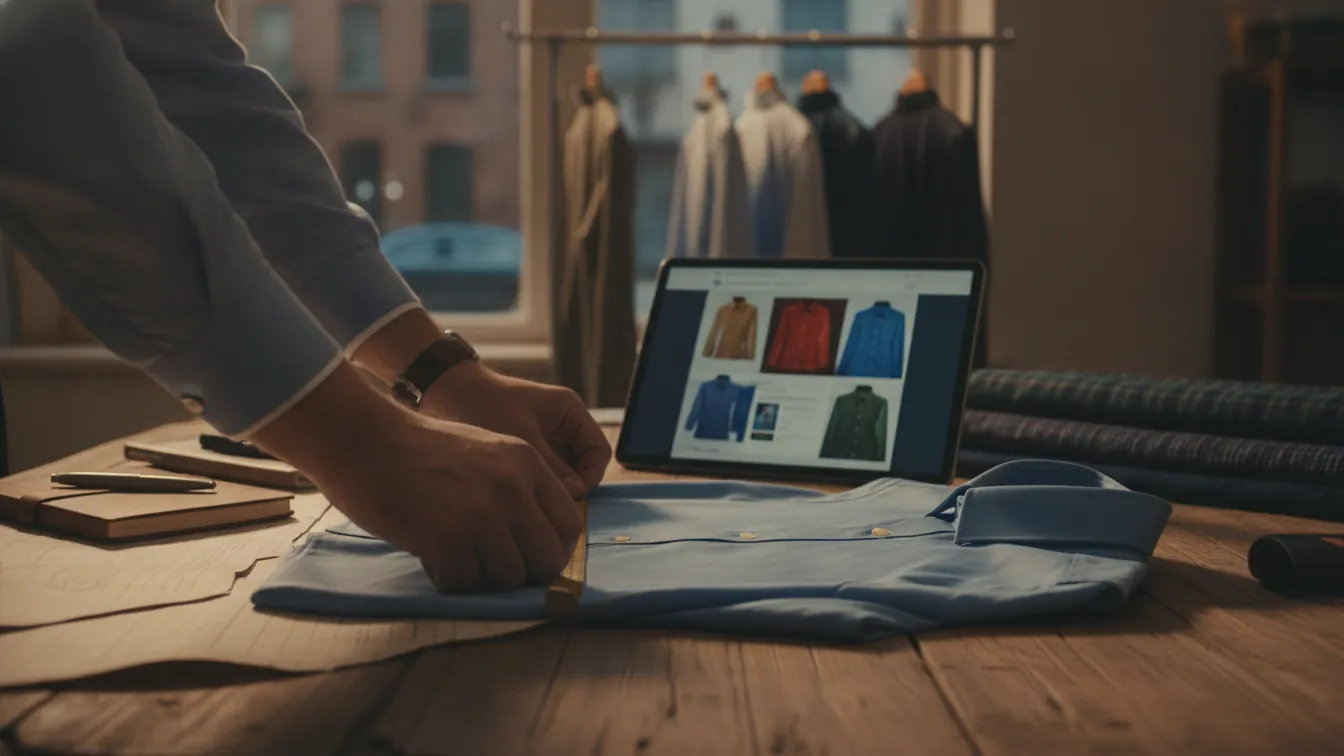
Picture two white shirts on two different websites. The photos look equally crisp, the prices are within a few pounds of each other, and both listings promise “premium quality”. A week after delivery, the collar on one has started to curl. The other feels stiff and pulls across the shoulders. You couldn’t see either problem on screen.
That is the difficulty with buying clothes online. You see a finished product under studio lighting, but the fabric, inner structure and stitching are hidden, though they affect how a shirt wears. So what should you check instead? Here are six things worth looking at before you click “buy”.
1. Check the Fabric Composition and Weave
Most shoppers look first at the composition line: 100% cotton, cotton/polyester blend, linen, viscose. That’s sensible, but it doesn’t tell the whole story. Two shirts that are both 100% cotton can feel and behave very differently, because the yarn, the weave and the finishing all affect how thick, soft, breathable and drapey the cloth is.
Weave is a good example. Poplin usually has a smooth, flat surface that suits a clean, smart shirt. Oxford tends to have a visible, slightly textured basket weave and is often used for casual shirts. Twill has fine diagonal lines, and how it feels depends on how it’s made. These are tendencies, not rules.
Look for exact percentages rather than vague phrases like “premium fabric”. Zoom in on close-up photos to see the texture. If the listing doesn’t mention the weave or fabric weight, ask the seller. Treat the label as a starting point, not a guarantee.
2. Look Closely at the Collar Construction
The collar frames the face, and it’s often the first part of a shirt to show wear. A collar that looks sharp out of the box may not stay that way after a few washes and pressings.
The outer fabric is only part of the collar. Most collars have an interlining, a layer of support material inside the outer fabric, which affects how stiff the collar is and how well it holds its shape. Interlinings can be fused (bonded with heat) or sewn in. Neither is automatically better: the result depends on the material, the bonding and the care.
Online, look for a front close-up of the collar, clear views of the collar points and the collar stand (the band around the neck), and photos of a model wearing the shirt both buttoned and open. Check the collar style named in the description, too.
3. Examine the Stitching and Seams
A shirt goes through many separate sewing steps: joining the shoulders, setting the sleeves, closing the side seams, attaching the cuffs and finishing the hem. Factories inspect stitching because faults can occur at any stage.
You can check three things from product photos:
- Are the stitch lines straight and continuous? Look for obvious wobbles, breaks or skipped stitches.
- Do the seams lie flat? Watch for uneven puckering or twisting, especially around the armholes and side seams.
- Is the inside neatly finished? If the seller shows the inside of the shirt, the seam edges should be tidy, not fraying.
Be wary of one-size-fits-all rules, such as a “correct” number of stitches per inch. The right number depends on the seam, the fabric and the design. Factories specify stitch types according to each seam and fabric. Photos give only a first impression. The real test is the shirt in your hands.
4. Inspect the Buttons and Buttonholes
You use buttons and buttonholes every time you wear a shirt, so they need careful inspection. A loose button or a fraying buttonhole is one of the first faults a customer notices.
Before you buy, look for photos of the front placket (the strip where the buttons sit), close-ups of a button and its buttonhole, and the cuffs, where buttons take a lot of strain. The stitching around a buttonhole should look dense and even, with no loose threads at the edge.
Missing close-ups don’t prove a shirt is badly made, since many sellers simply skip them, but it’s reasonable to ask for more pictures. When the shirt arrives, give each button a gentle tug to make sure it’s secure.
5. Compare the Measurements, Not Just the Size Label
Size is one of the most common reasons people send shirts back. A medium from one brand can fit like a large from another, because every brand has its own size chart and its own idea of fit.
The measurements that matter most are:
- chest (often given as the width across the chest when the shirt is laid flat)
- shoulder width
- sleeve length
- body length
- collar or neck size, for formal shirts
Your body measurements and the shirt’s measurements are different things. The shirt’s chest measurement needs to be bigger than your chest, because you need room to move and breathe. Pattern-makers call this extra room “ease”.
Take a shirt that fits well, lay it flat and measure it. Then compare your numbers with the seller’s size chart. Just check that you measure the same way the chart does (flat width or full circumference).
Fit names matter too. Regular, slim and relaxed shirts can have the same chest measurement but feel quite different through the waist, sleeves and shoulders.
6. Read the Care Instructions Before Buying
Some shirts feel lovely on day one and then need constant ironing, careful washing or dry cleaning. Read the care information before you order.
Three questions help:
- How should it be washed? By machine or by hand, and at what temperature?
- Are there special requirements? For example, a low ironing temperature or no tumble drying.
- Might the size change after washing? Many fabrics shrink or relax a little, but you can’t work out an exact shrinkage figure from “100% cotton” or a care symbol.
Care labels tell you how to clean the garment properly. They don’t promise it won’t shrink. In the United States, for example, the Federal Trade Commission’s Care Labeling Rule is there to make sure shoppers get proper cleaning instructions, not to guarantee zero shrinkage.
If the care details are missing, ask the seller. For fabrics you’re unsure about, ask whether the shirt has been tested for size changes after washing. Finally, check the returns policy, especially when you cannot try the shirt on.
A Final Check Before You Buy
The real limitation of shopping online is that you can’t pick up the shirt, feel the fabric or look inside the collar. You can still close much of that gap. Read the product details, compare the measurements, study the close-up photos, and ask the seller whenever something is unclear.
From a manufacturing point of view, a good purchase shouldn’t rest on attractive photos and marketing language. It should rest on clear, reliable product information, from a seller who’s happy to provide it.
About the author: Lucen Ma works on NOVITA’s international website and content, helping overseas buyers understand garment products and sourcing. NOVITA is a China-based menswear OEM/ODM supplier.